Backlog & Sprints: designing the planning core of Freshrelease
A three-pane epics / backlog / sprints workspace that let teams prioritize thousands of items and run sprint planning without leaving one screen.
Try the live prototype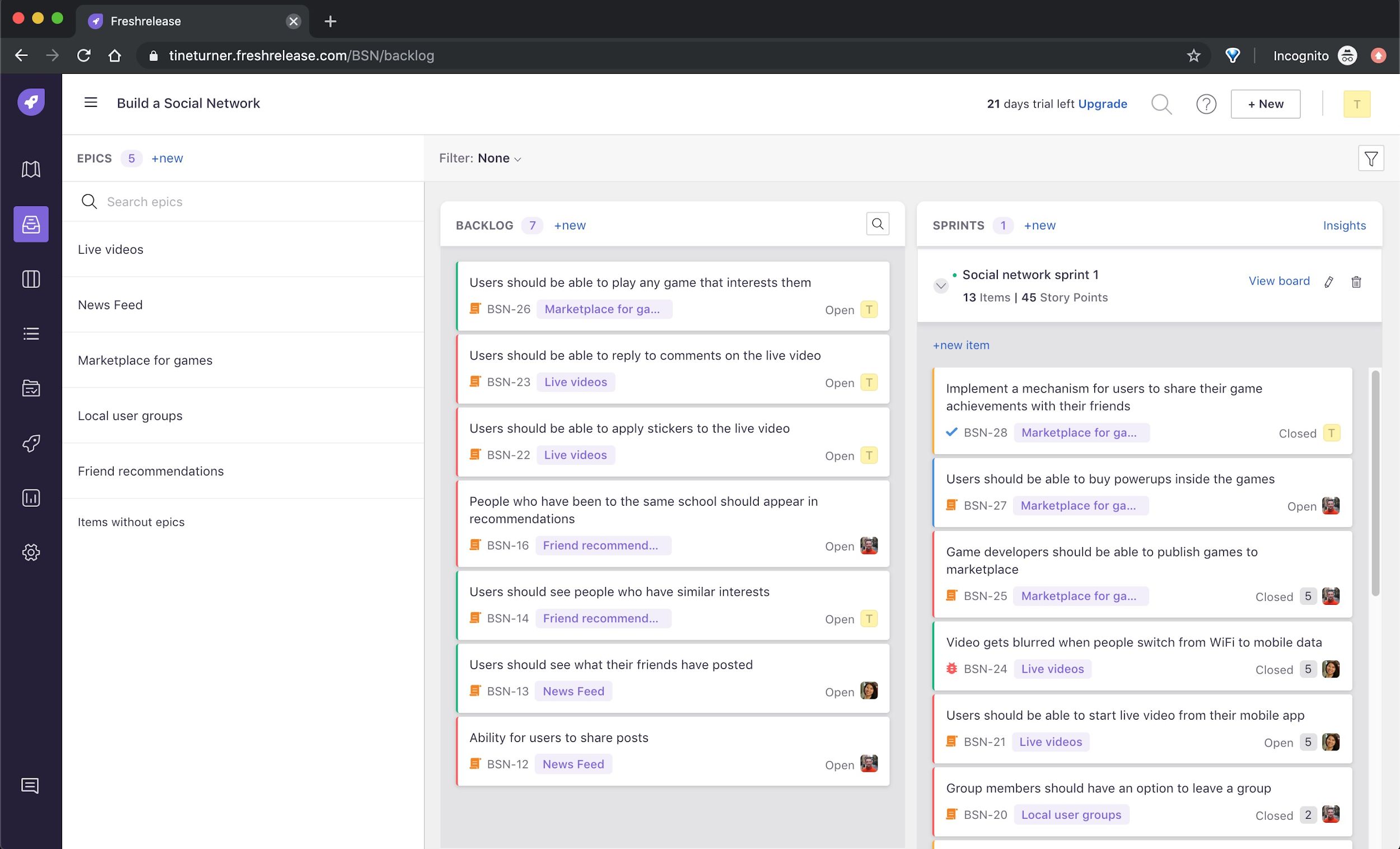
Freshrelease · all-in-one agile project management
Freshrelease is Freshworks' agile project management product — issue and bug tracking, roadmapping, backlog management, sprint planning, Kanban boards, test-case management, and release management in one place. The mission wasn't just to be another issue tracker, but to help teams ship quality software faster by making planning and status updates genuinely easy to use.
Help teams identify, break down, and prioritize work — fast
From a flat list to a real sprint-planning workflow
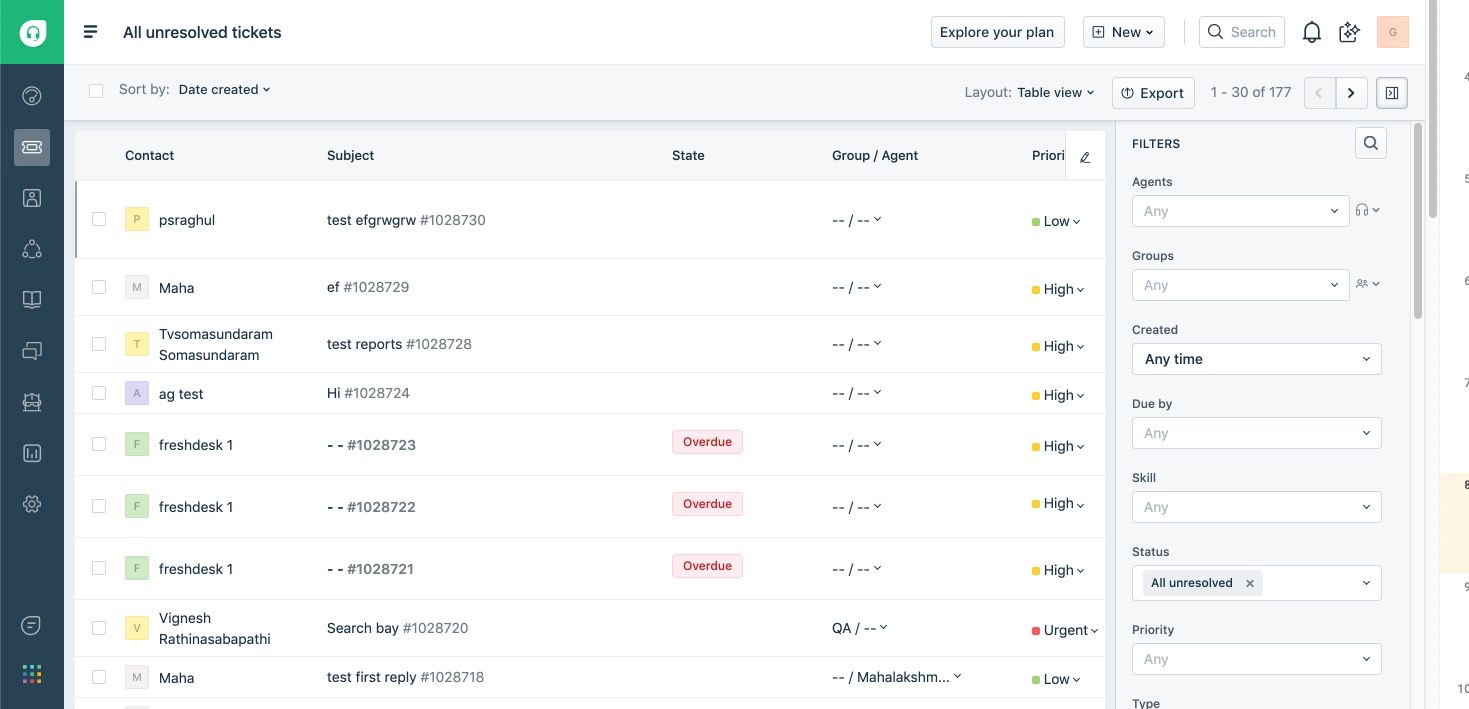
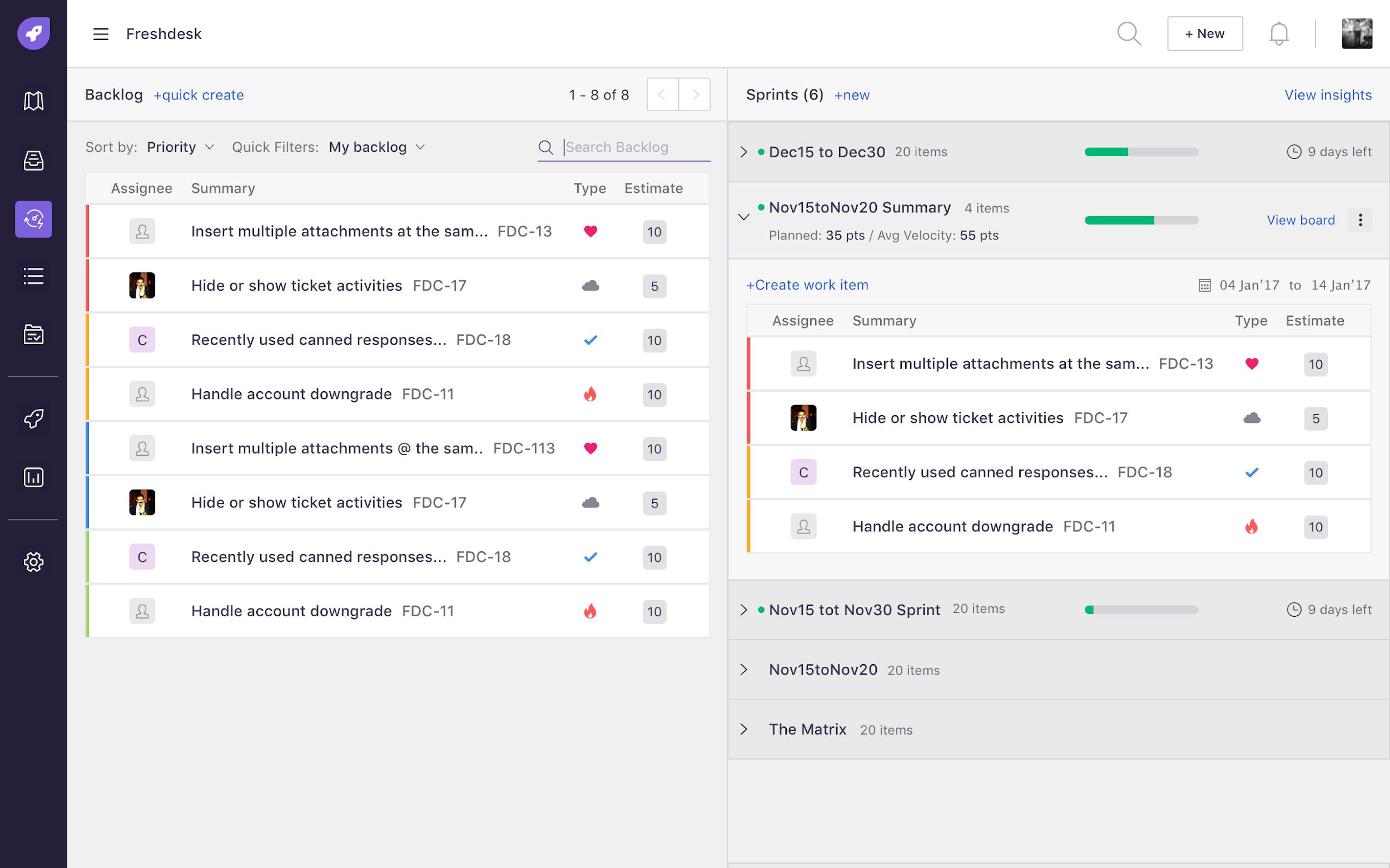
The starting point was a basic work-item list inherited from Freshdesk — usable for listing, but with no way to prioritize, which pushed teams toward Jira instead. Early versions split backlog and sprint planning across two separate pages, on the assumption that PMs groomed the backlog ahead of time and teams prioritized separately during the sprint.
Watching real sprint-planning sessions changed that assumption: prioritization was happening live, with PMs and the team in the room together, and people were constantly switching back and forth between the backlog and sprints pages. That observation — not a stakeholder request — was what justified merging both into a single view.
A three-pane view: Epics, Backlog, Sprints
The proposed solution was a single page with epics, backlog, and sprints side by side, epic context available on demand, and search, sort, and filters throughout — so nobody had to leave the page to plan a sprint.
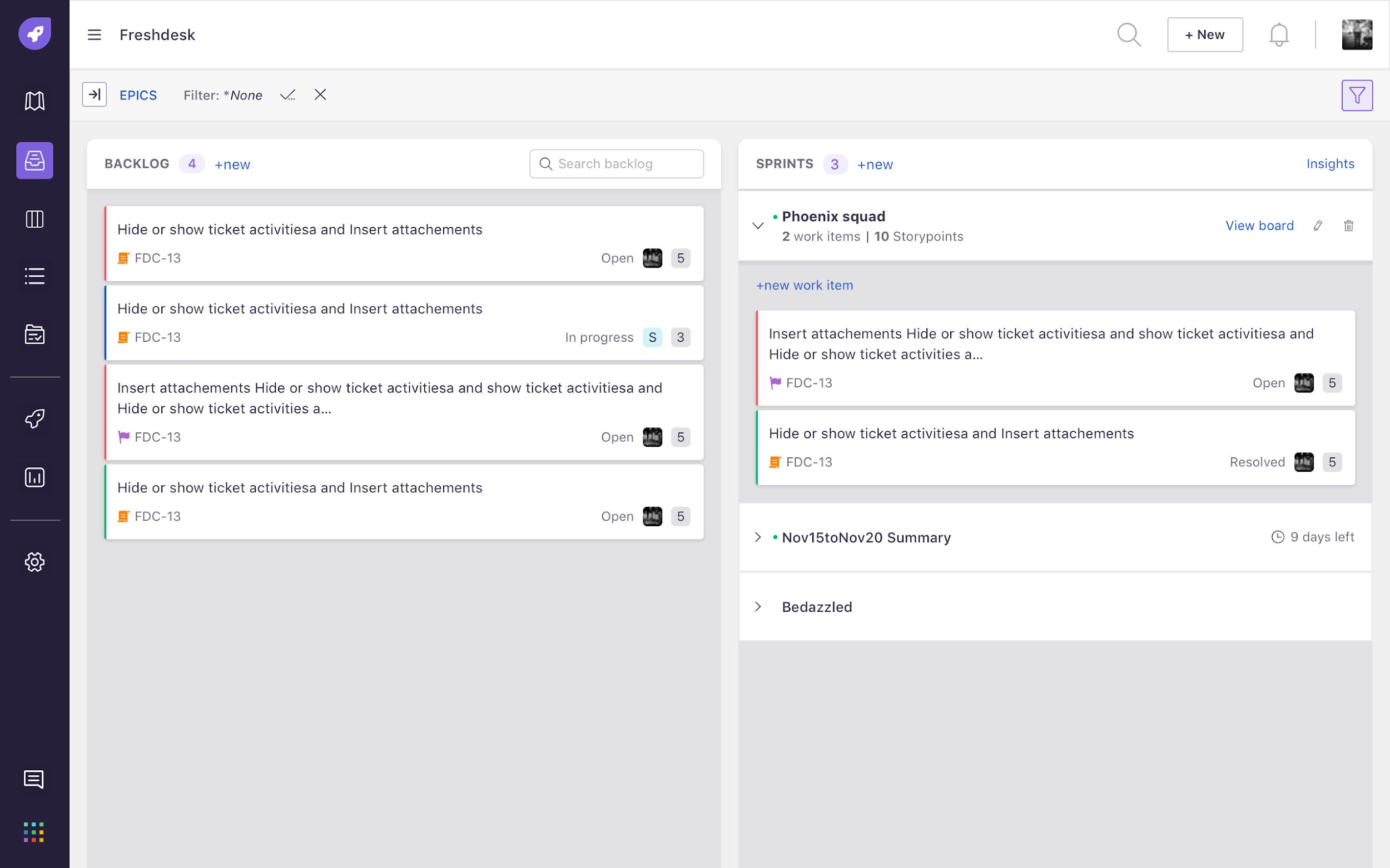
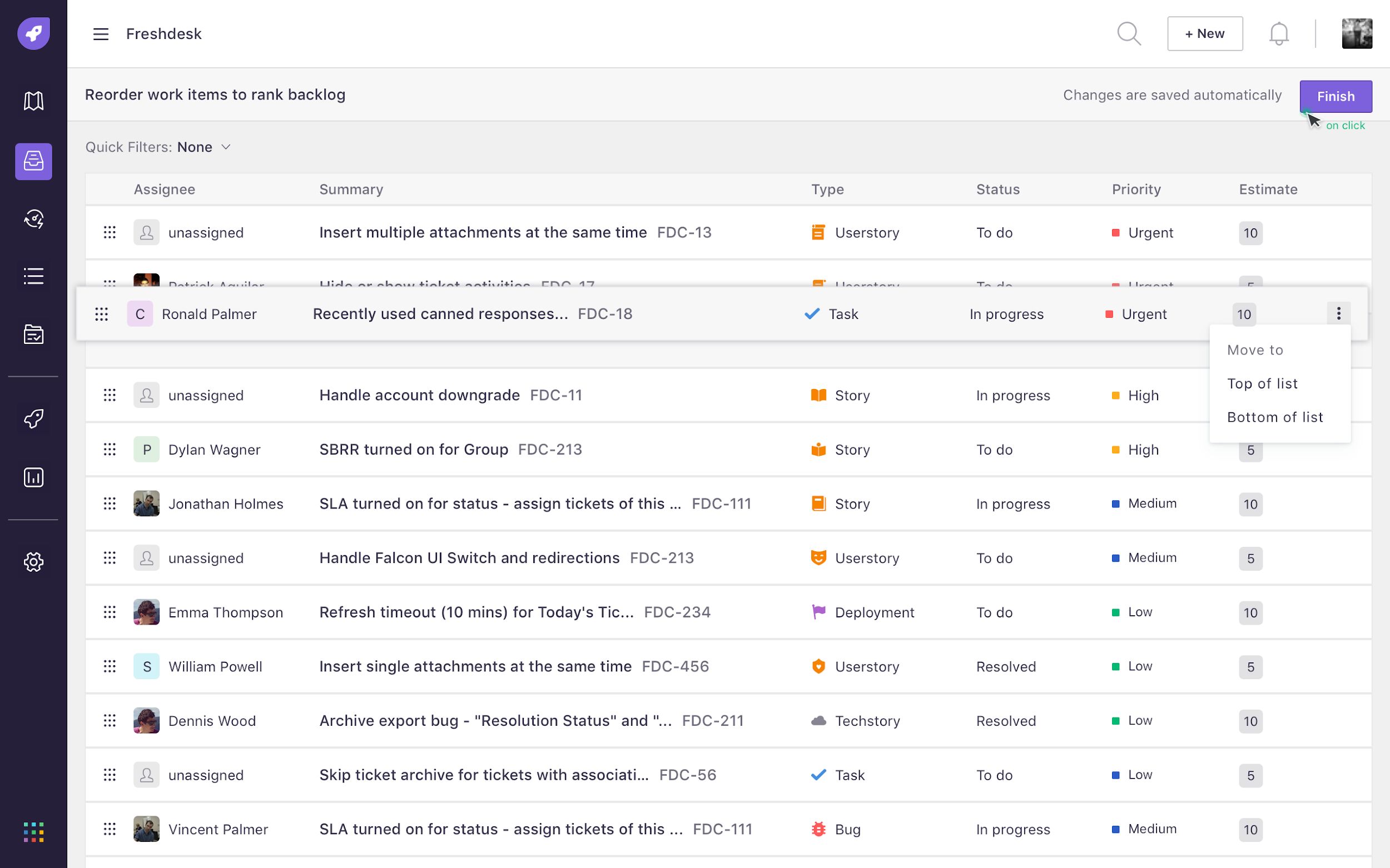
Fitting everything on one page — without breaking it
700 customers in 3 months
Customers validated the interface directly in sessions, sprint planning with epic context became noticeably easier, and the frequency of backlog ranking rose measurably once the UX friction was removed — a proxy for teams actually trusting the prioritization workflow.

The earliest project where I learned to design from behavior, not assumptions.
My initial assumptions about how PMs and teams would use the backlog were reasonable — and wrong. Watching one live sprint-planning session was worth more than the assumptions I'd started with, and it's the habit I've carried into every project since: watch the real workflow before committing to the information architecture.